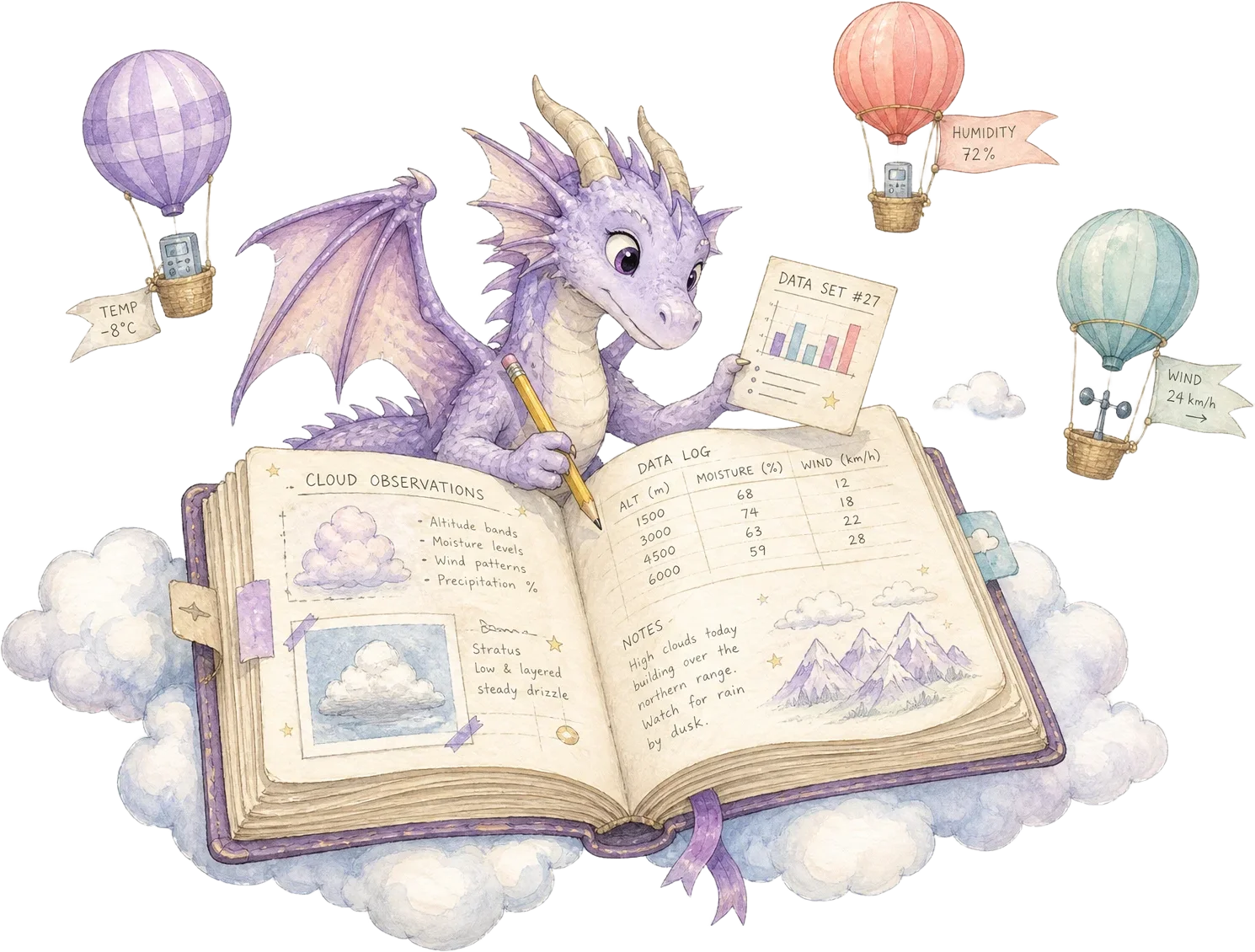
Tuning Dragons
What if you could take a tiny AI model and teach it one ridiculously useful skill?
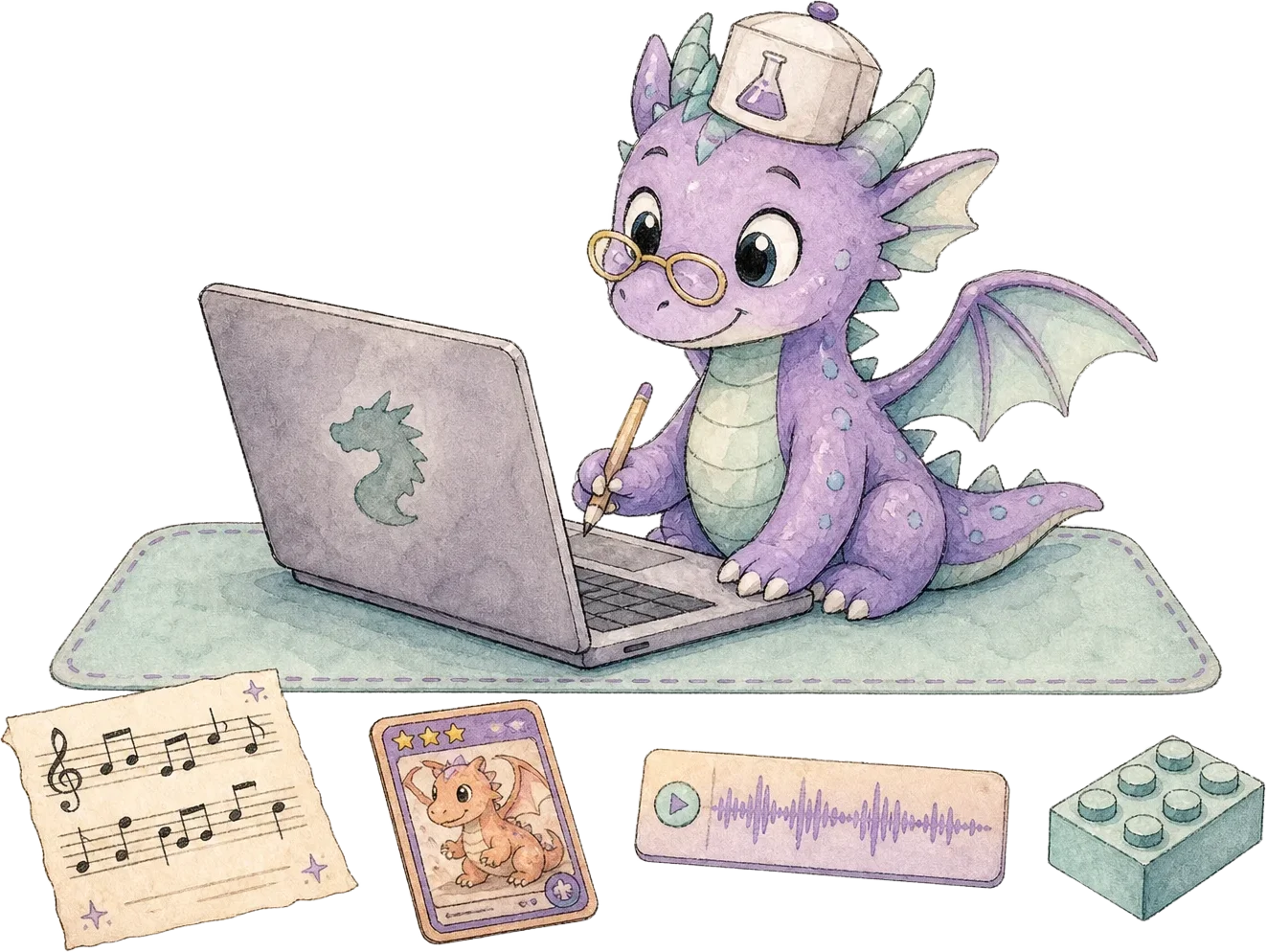
Teach it to read sheet music. Recognize your Pokémon cards. Understand your guitar chords. Speak in your voice. Turn a napkin scribble into a website.
No GPU farm. No ML PhD. Just a small model, some examples, and a dragon to train.
12 hands-on projects across text, audio, and vision.
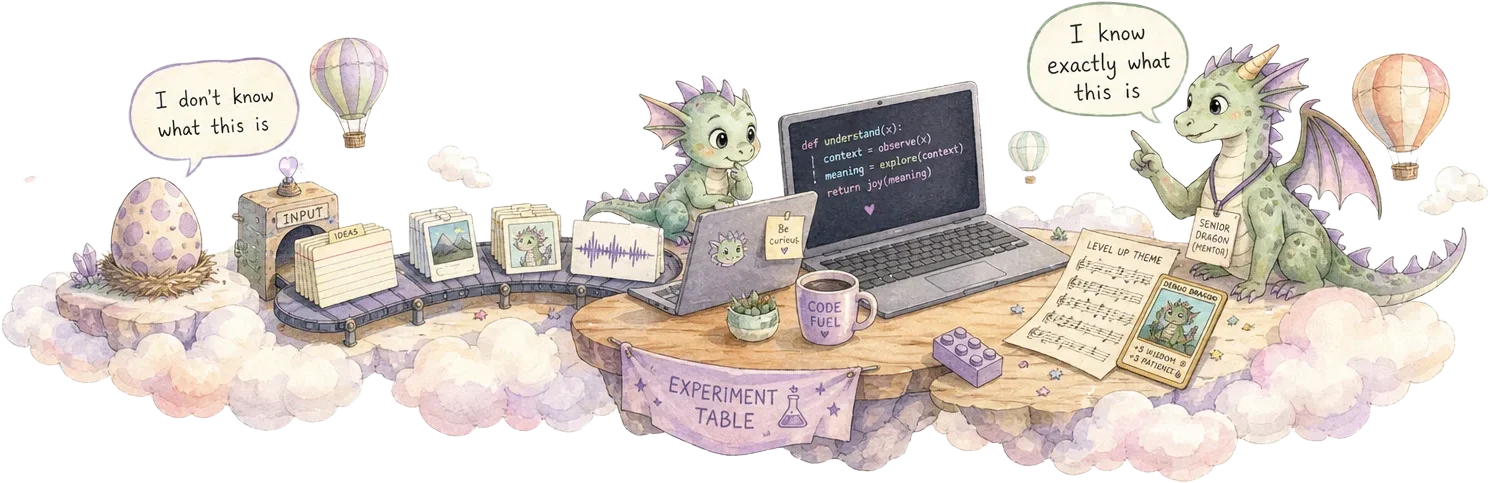
Most courses start with tensors. This one starts with a dragon.
You won't begin with slide decks about acronyms. You'll begin by teaching your laptop to do one concrete thing, then we figure out how.
Build → Train → Break → Measure → Improve → Ship
We deliberately choose small models and approachable techniques so you can experiment on the laptop you already own.
You hit a real problem. Then you learn the technique required to fix it. The jargon arrives exactly on time.
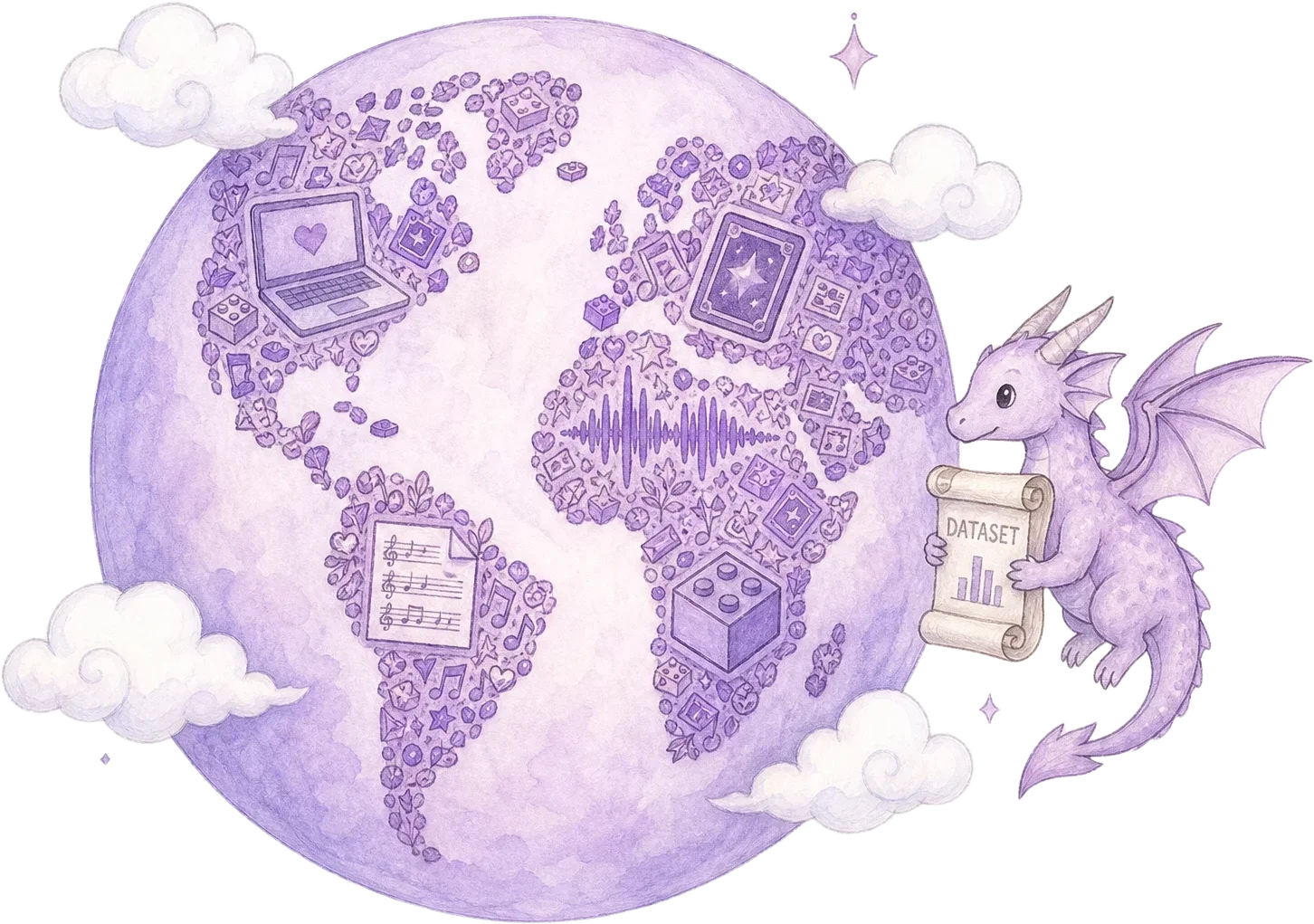
Specialists beat generalists at specific tasks. You'll teach dragons to read, hear, see, and speak, one dataset at a time.
Each project ends with something visible, audible, or testable. Before and after results, not vibes.
At first, your dragon doesn't know your cards. Your accent. Your sheet music. Your weird diagram format.
You give examples. You train. You test. You try again.
And suddenly a tiny model becomes shockingly good at exactly one thing.
12 Dragon Skills You'll Train
Not twelve identical cards. Twelve different before and after moments. You'll scroll, pick one, and think: "Wait, I can build this on my laptop."
You'll learn by building. Each lesson is: input → examples → training → a specialist dragon → output.
Your model goes from "I'm not sure" to "I know exactly what this is." Results beat theory.
JSON, tables, labels, exact IDs. Teach your dragon the format your software actually needs.
You'll break models, test them, track errors, and improve them, like any other dev workflow.
Bring your favorite stack. The course stays practical: data, training runs, evaluation, and repeatable workflows.
Go Tune Your Dragon


You don't need eight H100s. You don't need a datacenter. And you definitely don't need to wake up to a mysterious $4,000 cloud bill.
We deliberately choose small models and approachable training techniques so you can do as much as possible locally.
We'll show MacBook-friendly workflows (Apple Silicon) where it helps, and equivalent approaches for other hardware.
Not every model and every configuration runs everywhere, but you'll learn how to choose what fits your machine.